-edit.jpg?resolution=1352x700&quality=95)
New IMO requirements for reporting loss of containers at sea
New IMO requirements for reporting loss of containers at sea. The amendments will come into force on 1 January, 2026 and require captains to report both the loss and sighting of containers at sea and to communicate with nearby ships, coastal states and flag administrations.
JRC has developed a smart system that advises the crew on course and speed in certain sea conditions, thereby limiting the ship's rolling and preventing the loss of containers. The Anti-Parametric Rolling System (APRS) can detect waves, distance, direction and swell using the wave analysis function in the JMR-9200/7200 and 5400 series radars. This alerts the crew long before the ship starts to roll parametrically, allowing them to take action before it is too late.
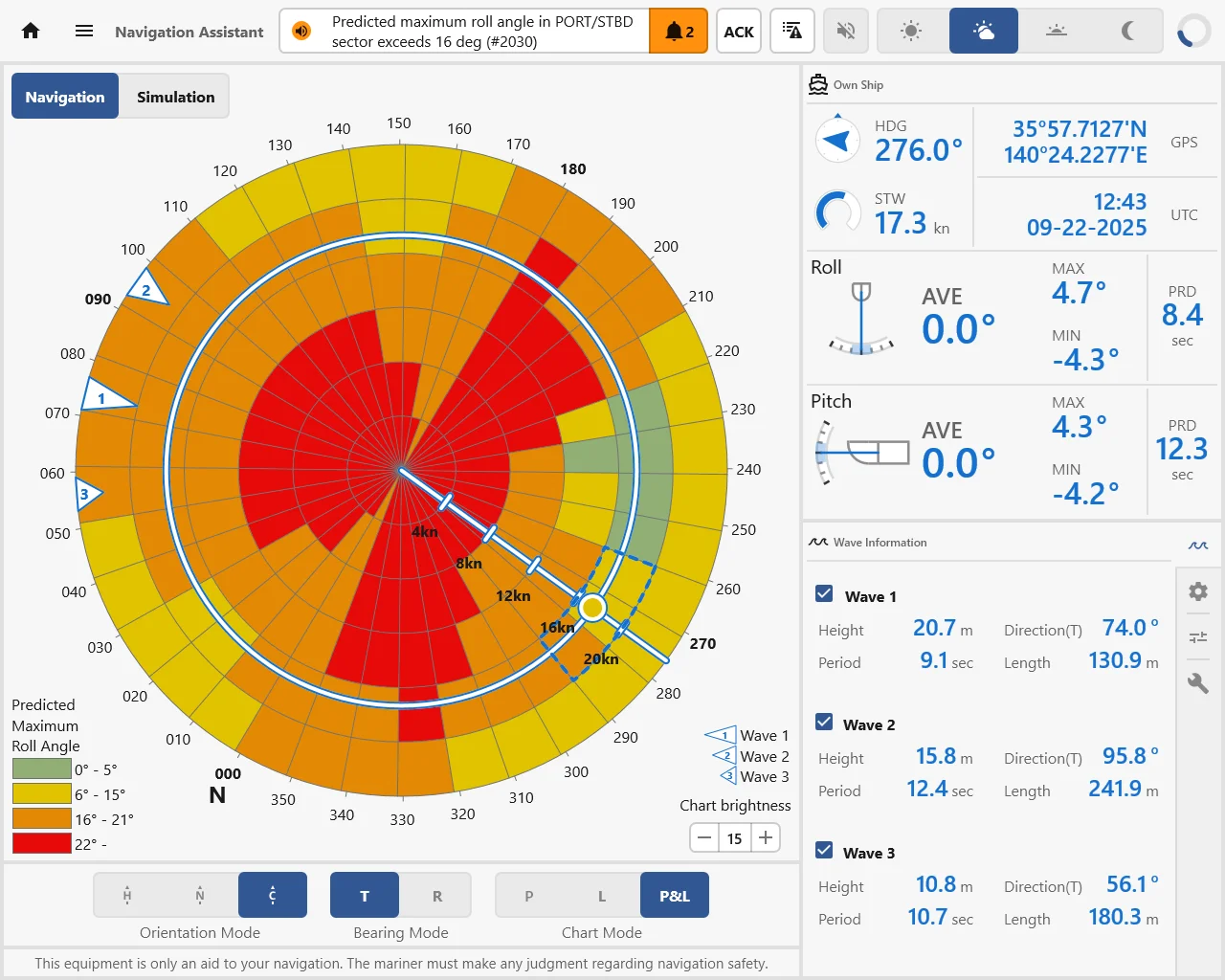
The smart algorithm displays all important and measured values in a clear layout. In addition, vectors are
used to display the speed and direction of the approaching waves and the current course and speed of the ship in a polar diagram. This graphical representation gives the crew a good insight into the situation and allows them to see whether the current
course can be maintained or whether it needs to be changed to prevent parametric rolling and loss of cargo.
From Detection to Prevention: How It Works
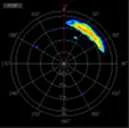
1. Wave analysis
By applying advanced radar technology of the JMR-9200/7200 and 5400 series radars and using the wave analysis function, the system analyses each detected wave in detail, including its direction, distance, height, period and length.
This continuous analysis provides the crew with reliable, real-time insights into sea conditions, enabling timely action to be taken to maintain safety and stability.
2. APRS displays dangerous course and speed
Using a motion sensor and our special algorithm, APRS continuously monitors the ship's movements. The system automatically extracts the ship's roll and pitch angles and calculates the corresponding periods.
This real-time analysis enables APRS to recognize potentially dangerous combinations of course and speed, alerting the crew in good time and giving them the opportunity to take corrective action before the situation becomes critical.
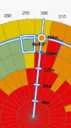
3. Hazard warnings with APRS
When hazardous conditions are detected, APRS automatically activates a warning. The system calculates by using our proprietary algorithms, the dangerous combinations of course and speed at which parametric roll motions can occur and clearly displays this information on a polar chart.
This gives the crew immediate insight into the situation and useful guidelines for avoiding risks.
4. Prevention: Avoiding a Rolling Vessel
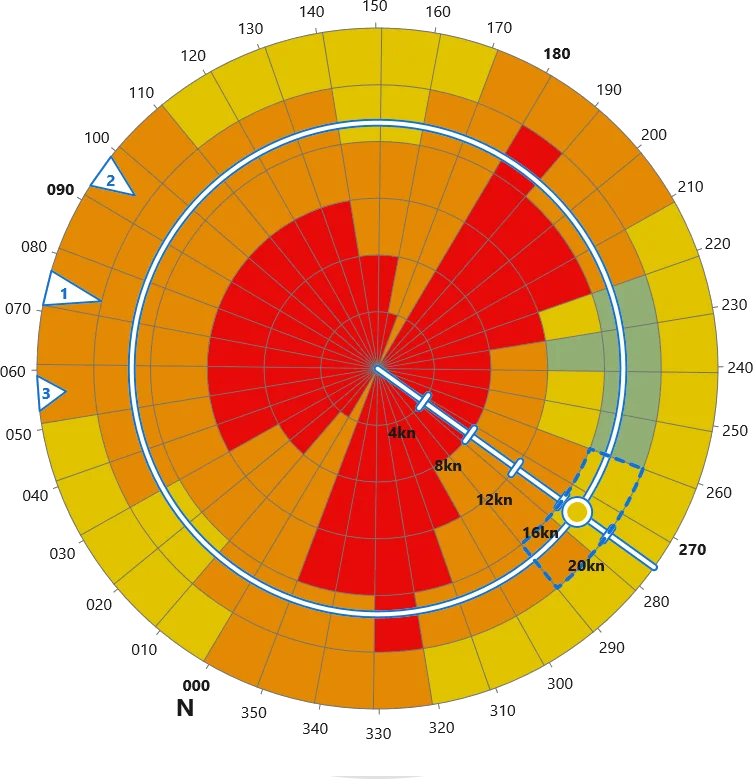
When APRS issues a warning signal, the crew can quickly assess the situation using the polar diagram. The vessel’s heading and speed are plotted alongside the three largest detected waves, ranked by their energy and displayed with their respective directions.
Clear color coding provides instant insight:
- Green indicates a safe course
- Red highlights dangerous directions requiring avoidance
By hovering over a colored sector, APRS displays the predicted maximum roll angle of the vessel in degrees. Armed with this information, the crew can adjust the heading or speed to avoid parametric rolling and preventing potential container loss and the operational disruptions that come with it.
Sail on the right wavelength, choose JRC!
Related articles
View all articles
Inclinometer - Precision that keeps you steady
JRC Europe has developed a complete solution, combining a high-precision roll sensor with a dedicated display, fully compliant with IMO Resolution MSC.363(92) – Performance Standards for Electronic Inclinometers. Our robust digital roll sensor delivers accurate and reliable measurements, ensuring long-term performance under demanding maritime conditions.
.png?resolution=848x476&quality=95&type=webp)
Ocean Explorer 3 – Navigation reinvented
Based on decades of navigation expertise and developed in close collaboration with ship owners, officers and end-users worldwide, JRC is proud to introduce Ocean Explorer 3: a completely new line of IMO navigation products that puts the operator first. This series includes a redesigned multifunctional display (MFD), solid-state radars, and a range of complementary solutions that work seamlessly together on the bridge.

OpenBridge 5.0 integrated in AlphaMINDS
We have integrated the new layout based on OpenBridge 5.0. By adhering to this standard, AlphaMINDS applications now feature an improved, modernized, and standardized user interface. OpenBridge was designed specifically for the maritime sector to enhance the experience of captains and crew members.
